Oil on Canvas
61 cm wide x 92 cm high
PROVENANCE: On hand at artist’s studio. Signed R16 on front bottom right. Artists seal and Certificate of Authenticity in Sleeve on back.
A vase is pulled apart without entirely losing its identity. Lavender shoulders, a dark neck, and a bright red interior gather around a pale curved opening, while a long magenta column carries the arrangement toward the bottom edge. Against the brushed pink ground, the object appears to occupy several positions at once: upright, cut open, and turning away.
In The Decomposition of a Vase in the Forth Dimension, the still-life subject becomes a study in interrupted continuity. Black contours act like seams between displaced parts. A violet passage enters from the left, and a fine pale line extends from the upper form toward the right edge, drawing the surrounding space into the vessel's disassembly. The brown strip below supplies a suggestion of a supporting surface, although the geometry refuses a settled point of view.
The contrast between the familiar title and the unfamiliar construction gives the painting its fascination. One can follow the remnants of an ordinary container, or attend instead to the shifts between lavender, crimson, cream, and pink. The elongated format gives the central form a nearly figurative stance. For a viewer interested in the boundary between still life and abstraction, the work offers a sustained question: how far can an object change before memory becomes the only thing holding it together?
 Image 1 of 8
 Image 2 of 8
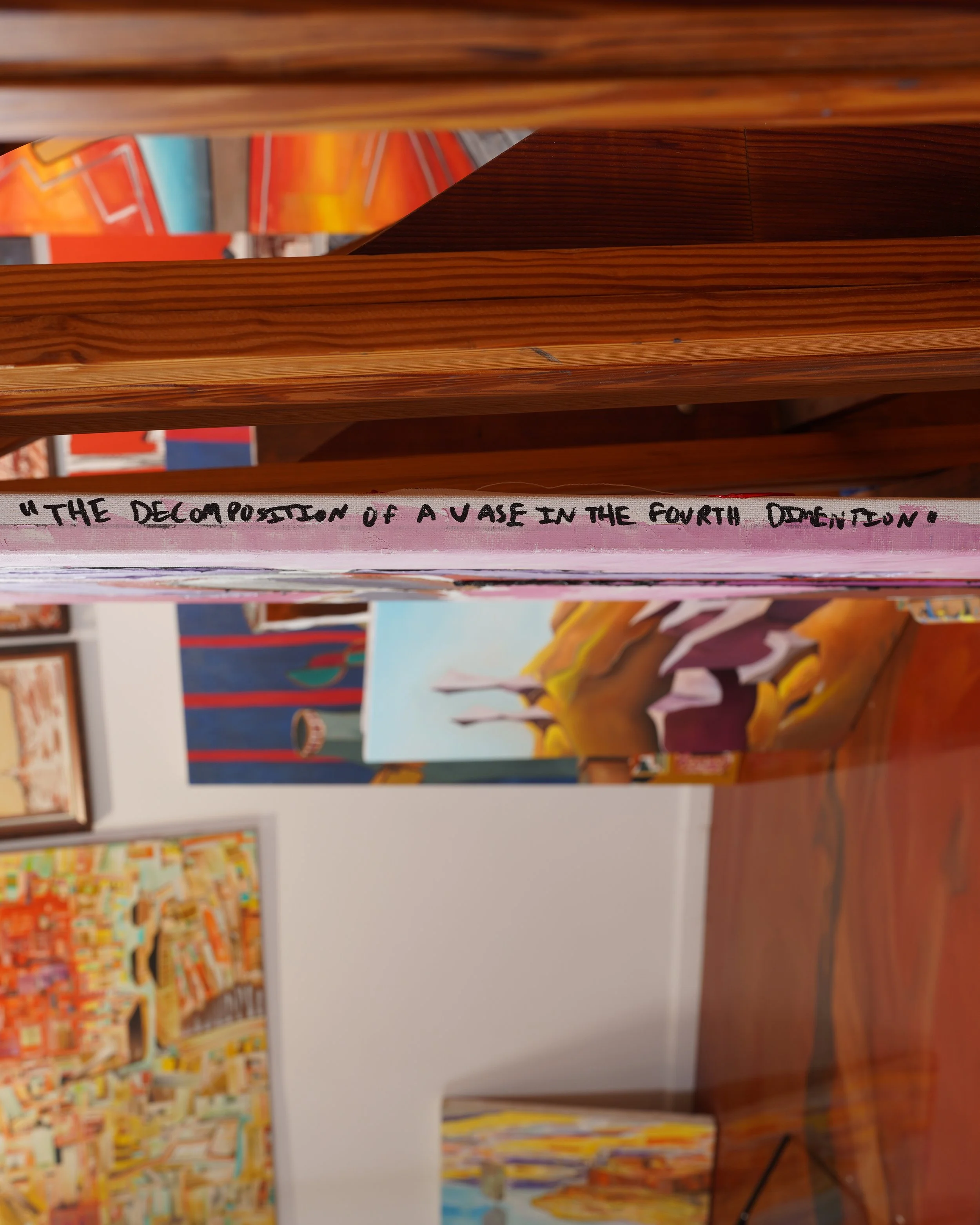 Image 3 of 8
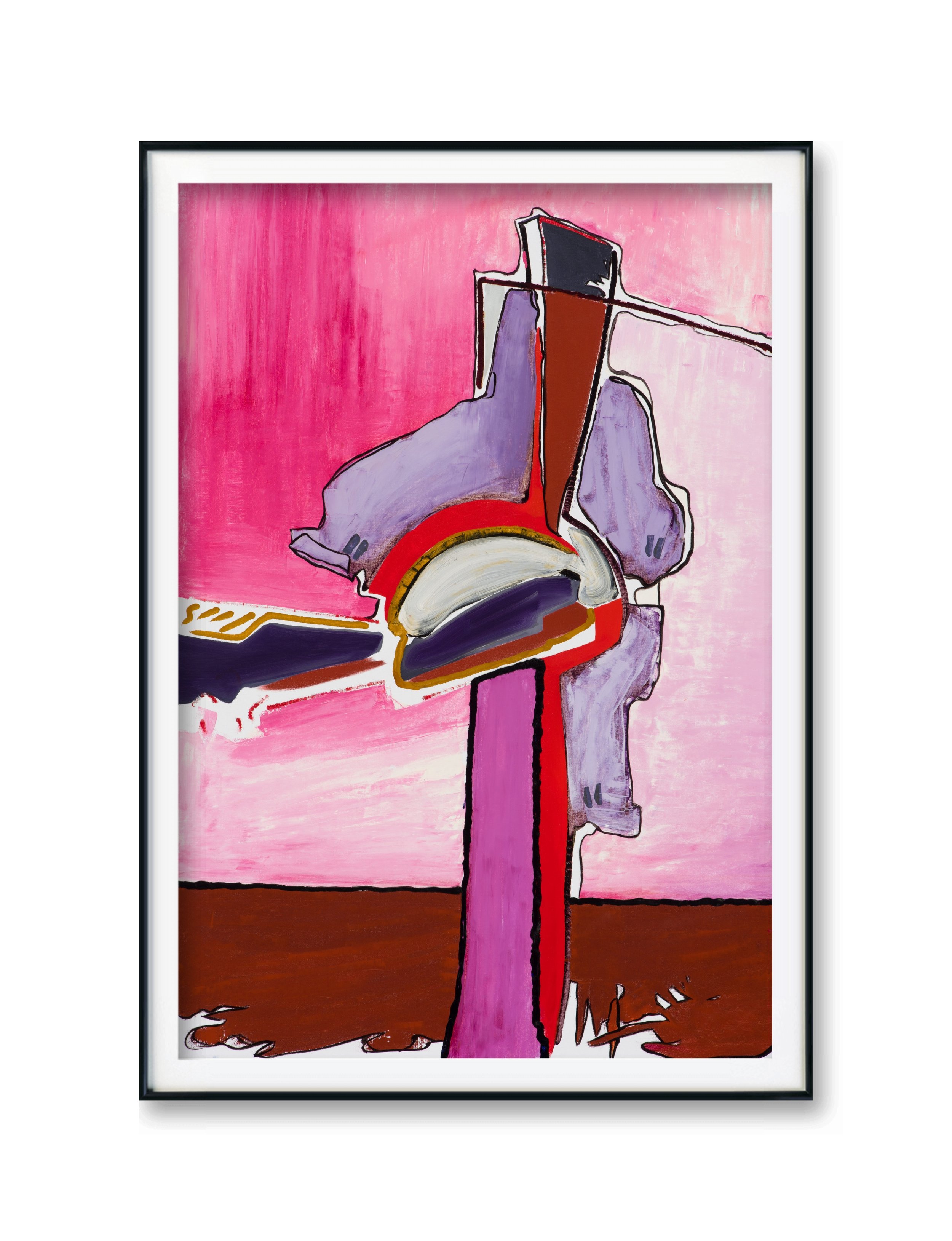 Image 4 of 8
 Image 5 of 8
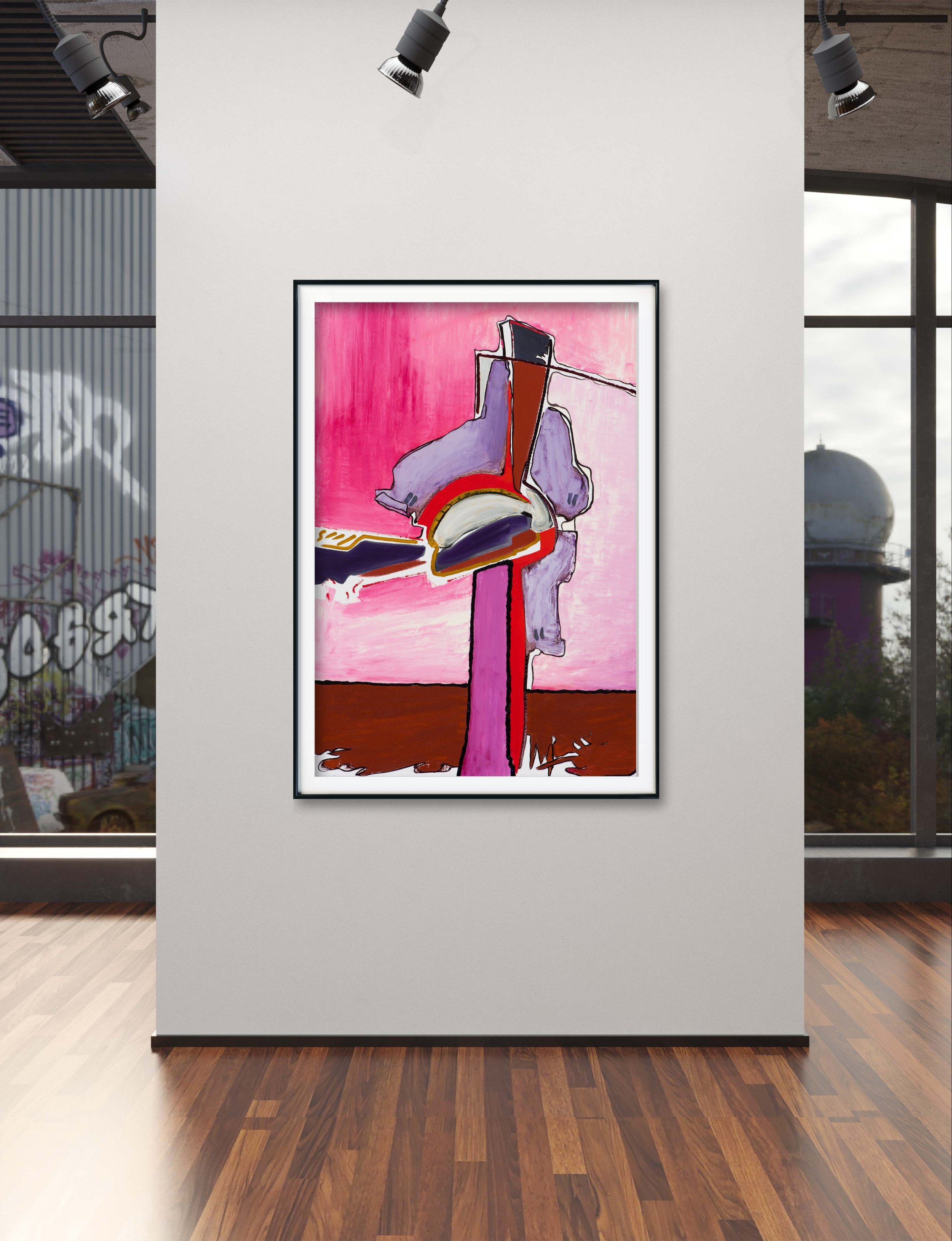 Image 6 of 8
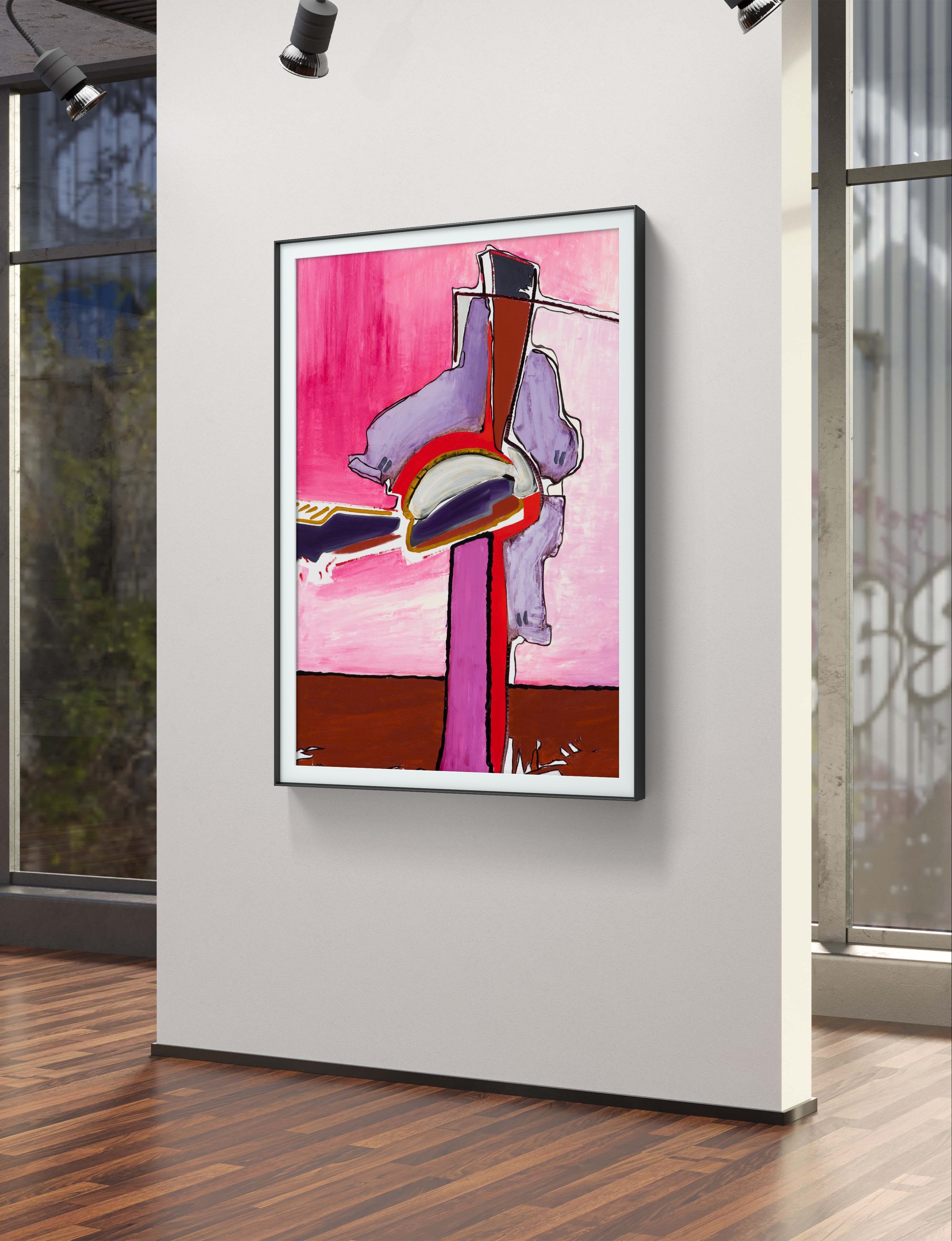 Image 7 of 8
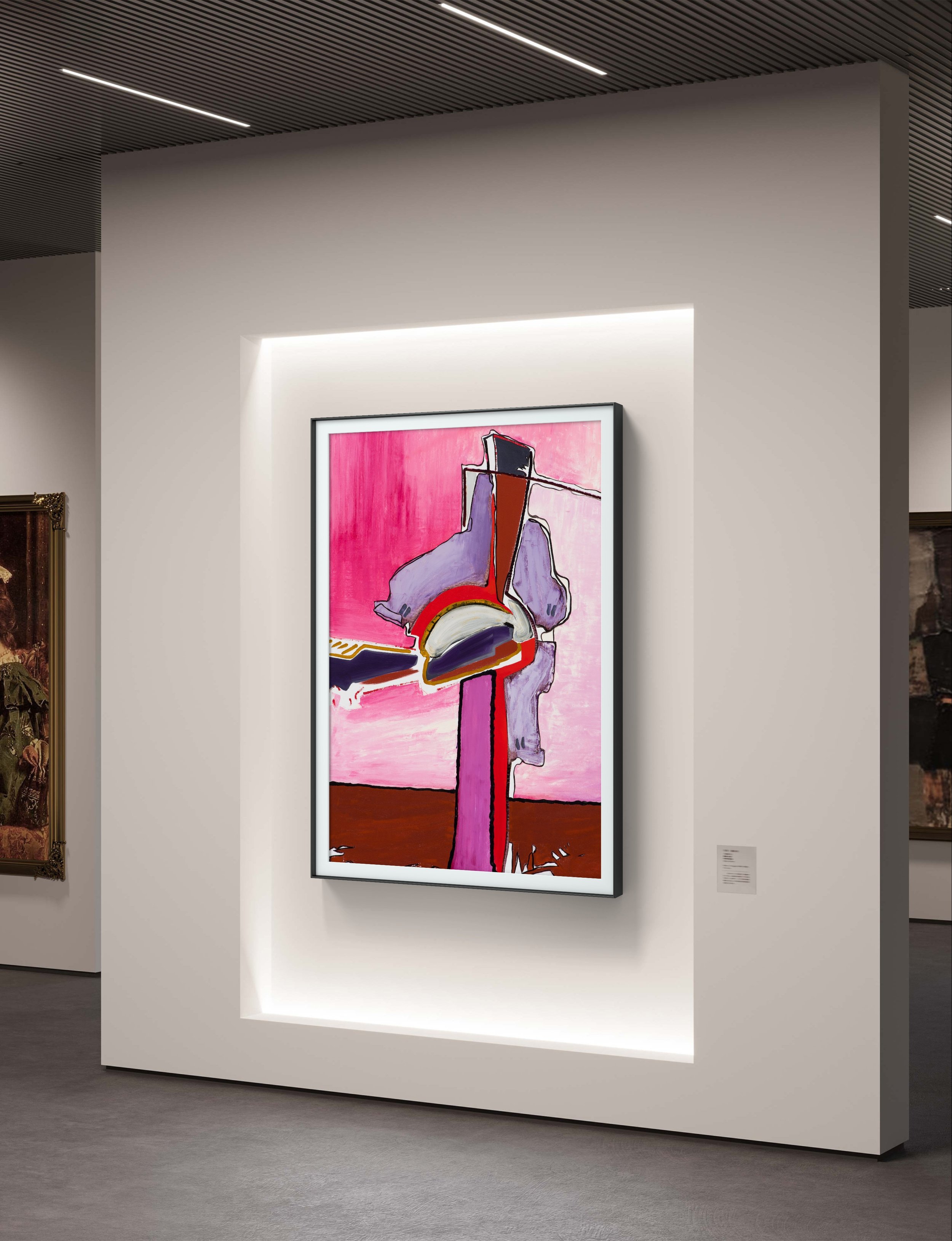 Image 8 of 8