91 cm wide x 51 cm tall
Oil on Canvas
PROVENANCE: On hand at artist’s studio. Signed R23 on front bottom left. Artists seal and Certificate of Authenticity in Sleeve on back. See Description below for more
A broad field of vermilion gives The Appropriate Easement its immediate presence. Across it, a broken white structure stretches above a dark, striated base. A narrow vertical form rises near the left of center, holding the composition between the measured stillness of an architectural fragment and the instability of something coming apart.
The painting's reduced palette makes small transitions carry unusual weight. Charcoal edges thicken into shadows, white planes expose streaks of red, and the lower band shifts through brown, gray, and pale linear marks. The eye follows the irregular silhouette as though tracing a wall or a boundary, then encounters openings that unsettle that first impression. Empty red space becomes as consequential as the forms it surrounds.
The title introduces the idea of passage: a limited permission to move through territory. Seen in that light, the canvas suggests access negotiated through obstruction, with its upright element acting as a possible hinge or marker. That reading remains open. What gives the work its distinctive character is the balance between the expansive color above and the dense, worked surface below. Its horizontal scale encourages the viewer to read the edges slowly, discovering where an apparently solid structure becomes a route through space.
 Image 1 of 10
 Image 2 of 10
 Image 3 of 10
 Image 4 of 10
 Image 5 of 10
 Image 6 of 10
 Image 7 of 10
 Image 8 of 10
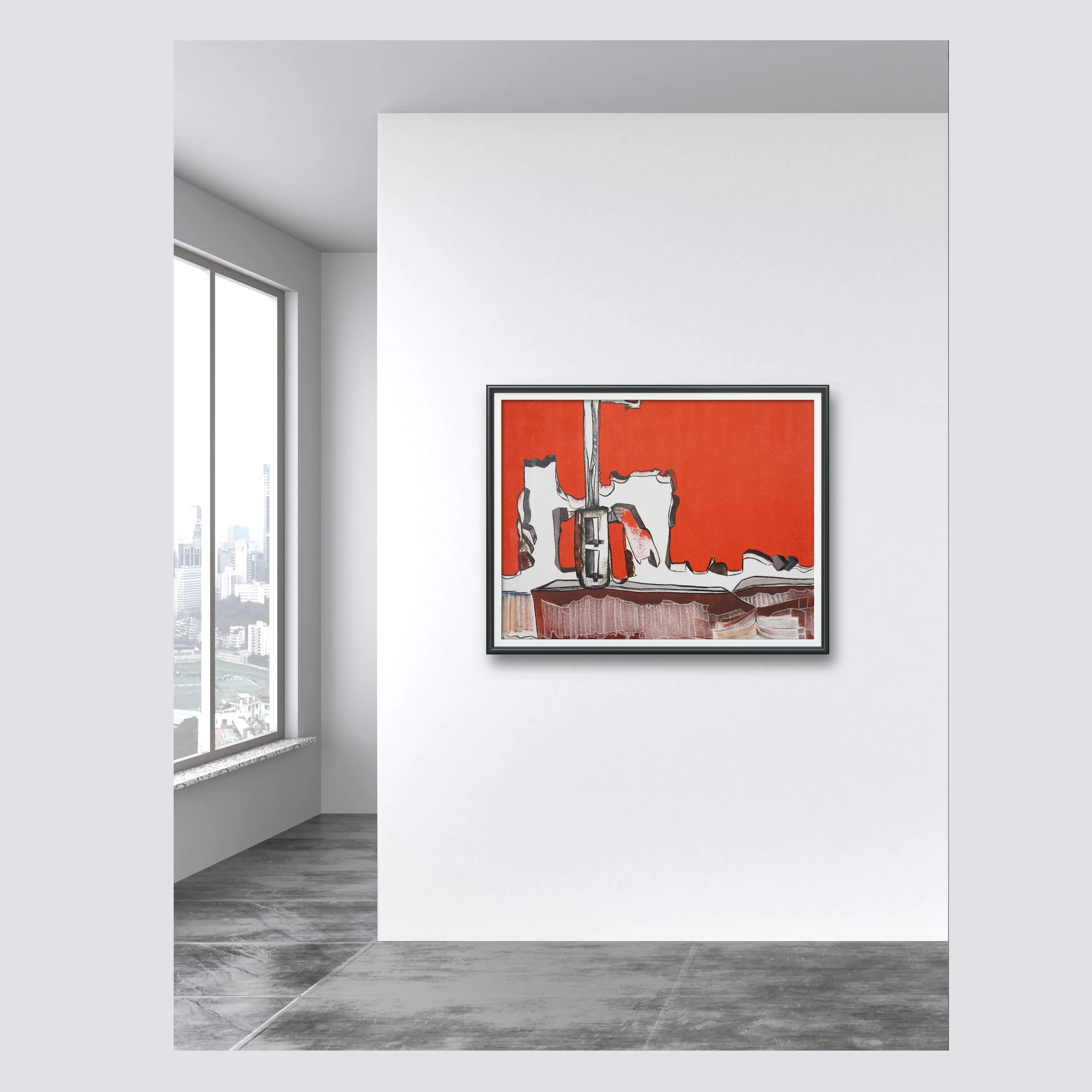 Image 9 of 10
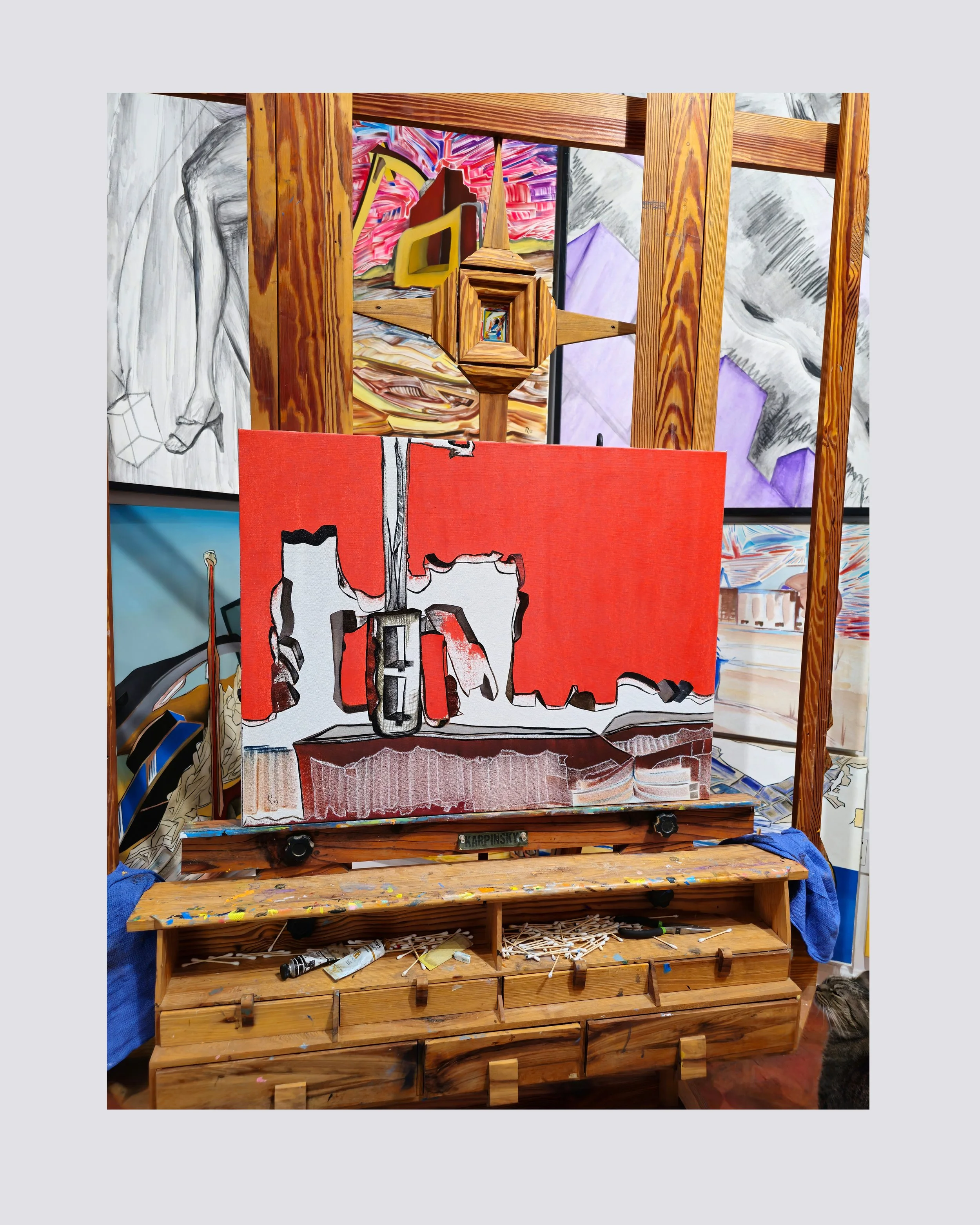 Image 10 of 10